
(206) 486-2542 pepper@paseattle.com
Beyond Balance: How Professionals Are Architecting Lives That Actually Work

Beyond Balance: How Professionals Are Architecting Lives That Actually Work

The cat’s out of the bag: women everywhere are exhausted.

And it’s no wonder. High-performing professional women are realizing that the way they’ve been approaching life (or rather, the approach they’ve been handed) is far from sustainable.

From an early age, most women are taught to embrace the “strong” moniker. The woman who does it all and makes it look effortless. The superwoman who doesn’t complain. So when life feels heavy (and it often does when you’re juggling so much) it’s easy to kick off the self-judgement cycle.

Maybe I need to try harder.

Maybe I’m not doing enough.

But with so much on their plates, women are beginning to share a quieter truth: doing it all was never possible to begin with.

More and more women are starting to admit that the old rules of working harder, optimizing everything, and proving you can handle it no longer suffice. Instead of internalizing that as a personal failure, they’re questioning the system itself.

They’re becoming the architects of their own lives. Lives that give as much back to them as they give to everything else. This can be your reality too.

Why This Feels Hard (And Why It’s Not Your Fault)

For many high-performing women, especially those in demanding careers, there’s a mental load that runs parallel to their professional responsibilities. While they’re leading teams, making high-stakes decisions, and driving results at work, they’re also managing the unseen operations of daily life: keeping track of schedules, noticing what’s running low, coordinating logistics, remembering appointments, planning meals, managing household admin, and anticipating everyone else’s needs before they become problems.

There is only so much cognitive energy available, and every decision empties that tank a little more. Over time, that leads to a consistent feeling of overwhelm. By the time women reach this point, they’re often quicker to believe something is wrong with them than realize there’s something fundamentally wrong with the system they’re operating within.

Cultural programming tells us that if you were really capable enough, you’d be able to handle this. But it has never been an issue of competence. The problem is that these sky-high expectations were never realistic.

Trying to keep up may not have put you in full burnout, but you’re feeling the toll in subtler ways. You may feel less creative, have a shorter fuse, or have a hard time staying present in the moment. There may be a persistent sense of being “on” even during moments meant for rest.

It’s not just you. In fact, now we’re seeing the consequences of that sustained pressure for women across the board.

According to a 2025 Bureau of Labor Statistics report, more than 450,000 women have dropped out of the U.S. labor market since January. When CNN spoke with hundreds of these women, a consistent theme that emerged was unrealistic expectations around what women were expected to carry.

As Bernice Choa, a 42-year-old C-suite executive and mother of two, shared:

“I was expected to be available for last-minute client meetings while also managing every detail of home and family life. The juggling made burnout inevitable. It wasn’t one big breaking point — it was the slow accumulation of unrealistic demands that made it clear the system wasn’t built to support working mothers.”

Return-to-office mandates only amplified what was already fragile. For women carrying caregiving responsibilities, the loss of flexibility exposed how unsustainable the existing model truly was. Faced with little accommodation for the realities of their lives, many women made difficult but brave decisions to step away.

They’re not opting out because they can’t handle the pressure but because they recognize the system for what it is: something structurally unsound with little support in return.

Just Because You Can Doesn’t Mean You Should

For years, you were told that capability was the goal. No matter what comes your way, you should be able to manage it. And so you stretched, absorbing more responsibility and more mental load because, technically, you could.

No more. Women are increasingly realizing that just because they can carry everything doesn’t mean they should have to. Especially when the result is constant exhaustion and a life that looks successful on paper but feels unsustainable in practice.

We see this most clearly in the women running a demanding career while quietly managing the operations of a household. The women who keep everything moving without it ever being acknowledged as work. They perform invisible labor that doesn’t show up on a spreadsheet, but it consumes real time, energy, and mental bandwidth that adds up as the years go by.

We see it in the executive who keeps telling herself she’ll get help “once things settle down.” Except things never settle down. But as the conversation gets louder, the catch-22 they’ve found themselves in is clearer than ever, and everyone is looking for a better way.

The question has shifted from “Why can’t I do this on my own?” to “Why did I ever think I had to?”

The result is more women opting out of the outdated belief that success requires self-sacrifice at every turn. They’re recognizing what their time is worth and allowing themselves to make decisions accordingly. They’ve started to apply the same logic they use at work and recognizing that doing everything themselves was never strategic.

They’ve stopped bending themselves to fit a system that wasn’t designed to work and started building lives that do, and it’s giving them the freedom to be present in their lives in new and more fulfilling ways.

The Shift We’re Seeing

We see this at the highest levels of leadership. Women in executive roles aren’t chasing burnout as a badge of honor because they see the merit in choosing differently.

They’re architecting lives around their values.

Lives that don’t equate exhaustion with success or involve organizing everything around expectations that leave no room for what actually matters.

And we see it every day on LinkedIn. Post after post from women announcing bold departures from traditional corporate ladders not because they couldn’t handle the work, but because they reached clarity.

  • Julie Averill, former CIO of Lululemon and REI, now building an intentional future as an author, board member, speaker, and advisor.
  • Annie Lou, former Managing Director at Charles Schwab, now serving as an executive advisor while running her own strategic advisory firm.
  • Marissa Coughlin, former communications leader at Airbnb and T-Mobile, who followed a creative pull to launch Swoon City—a romance bookstore and community hub.

These are all women who walked away from systems that didn’t support their next chapter and built new ones that did. And as they do, they’re realizing in real time that success was never about doing everything themselves. It was about building the right teams both at work and at home.

Let This Be Your Aha Moment

Here’s the question worth sitting with. If you saw another woman in your exact situation— capable, accomplished, stretched thin—would you tell her to try harder? Of course not. You wouldn’t suggest she manage better or push through. You’d tell her to get help. You’d tell her she deserves support.

Maybe it’s time to take your own advice.

Delegation is something high-performing women already understand deeply, at least at work. In professional settings, you don’t try to do everything yourself because you know that outsourcing is strategic. You build teams, assign ownership, and create systems that can operate without constant oversight.

Yet when it comes to your personal life, hesitation creeps in. Maybe it’s the belief that you should be able to handle this. Or the fear that needing support means you’re failing at something others seem to manage effortlessly.

Consider this reframe. Think of it as a life-design decision, where the question isn’t whether to get support, but what support should look like for you specifically. Support that’s reliable and aligned with how your life actually works.

This is where having the right partner matters. And that’s exactly the gap that Pepper’s Personal Assistants was built to fill. We exist for women who are intentionally designing lives that work. Not because something is broken, but because sustaining what matters requires systems that support it.

Choosing support isn’t a personal failing. It’s a strategic decision about your time, your energy, and the life you’re building. Let us help you design the life of your dreams.


How Not to Burn Out in 2025, Busy Executives

How Not to Burn Out in 2025, Busy Executives

Do you remember last year’s viral reel, “When you’re overstimulated but still trying to be nice?

It showed a parent, clearly overstimulated, but still trying (albeit failing) to be nice to her children in the background.

The reel struck a chord with many of us, and for good reason. Balancing work and personal life as a busy executive can be overwhelming. This is especially true when your job seems to take all of you, leaving you unable to show up for your family and friends how you’d like.

Paradoxically, as your career thrives, it can feel like your home life is falling through the cracks.

Home repairs go unscheduled, children’s questions get pushed away, and there is a constant fogginess and mental fatigue surrounding every decision to be made-no matter how small. The weight of it all leaves you mentally and emotionally depleted.

It’s no surprise then if when you’re physically with your loved ones, you sense you’re not fully there. Instead, you likely find yourself emotionally preoccupied with the numerous things that must be done and the never-ending demands of work and life.

If this resonates, you’re not alone. Countless high-performing executives and C-suite employees face the same challenge.

Read on to learn how decision fatigue and overwhelm might be limiting your emotional presence and how you can achieve a better work-life balance in 2025.

Signs You Are Emotionally Absent in Your Life

You come home after a long day to children who are excitedly showing you their latest art projects. You only nod while responding to an email on your phone. They put the drawing away, assuming you’re too busy to care.

Then there’s the constant reliance on the word no: no to a quick game, a walk, or even a conversation. Everything feels like too much and you find yourself easily overwhelmed. So much so that small requests irritate you, playful moments with your kids feel like interruptions, and even light conversations seem like a burden. You tell yourself you’ll invest in them on the weekend, but instead, your weekend becomes an endless to-do list, and the crazy cycle starts all over again.

Joy becomes harder to access in your daily life. The things you once found humorous no longer brighten your days. Your children sense your frustration; they see their laughter or questions as distractions from more “important matters.”

This is what it looks like to be emotionally absent.

While you may be physically present, the effort required to connect in a meaningful way with those around you isn’t. Over time, these moments accumulate, and the distance grows unnoticed until it’s too late.

If you find yourself snapping at loved ones, overwhelmed by even mundane decisions, or consumed with worry, these are signs you’ve become emotionally unavailable. But this isn’t about blame. You’re not alone, and there’s a way forward. Change and support is possible, but it starts with a healthy awareness.

What’s Keeping Executives from Being Emotionally Present?

How did we get here?

The advent of smartphones and messaging apps has created an always-on culture. What once required scheduled meetings now steadily creeps into your personal time. Our connectivity comes with a price: our time and energy are constantly accessible to others.

Adding to this challenge is the blurred boundaries between work and personal life. A quick email check at dinner turns into back-and-forth correspondences, an expectation of responsiveness. As you bear the mental load of strategic decision-making, coordinating teams, and solving problems, there’s little bandwidth left for emotional engagement at home.

Compounding this is the myth of being super efficient. Having excelled at work, many high-achieving professionals expect that the same precision and success will simply translate over to their home life. This belief often leads to guilt or reluctance to seek support, as they perceive it as a failure or inadequacy.

Then there’s the challenge of finding good help. We are accustomed to excellence so enlisting help isn’t as simple as hiring someone to handle tasks. It can feel impossible to find someone who meets the standards of skill, discretion, and trustworthiness. For many, we’re not looking for another staff member to manage. So we press on in the malaise and remain stuck in a cycle of burnout.

The system is perfectly designed to pull you further away from emotional presence in your life, despite your best intentions.

But what’s the real cost of this absence?

How Not to Burn Out in 2025 with Personal Assistants 8

The High Cost of Emotional Absence

Being emotionally absent poses significant challenges to individuals and the overall family dynamics.

The formative years of childhood-and even adolescence-are crucial in shaping children’s emotional and social skills. They need high levels of emotional safety and regulation as they maneuver the changes in their lives. When a parent is emotionally unavailable, children can feel isolated, neglected, and insecure, which may hinder their ability to process emotions effectively. Without that anchor, children may struggle to develop the confidence and emotional resilience they need to thrive.

The level of emotional regulation a child experiences, even into adolescence, is proportionately linked to the parents’ emotional responsiveness.

The effects extend beyond children. Partners, family members, and friends may feel unappreciated, unseen, or disconnected. The result? Misunderstandings, resentment, and, eventually, emotional distance or conflict.

These consequences apply to you, too. If you’re emotionally absent from the people around you, chances are that you are abandoning your emotional needs as well. Over time, the awareness of missed milestones can weigh heavily. The emotional dissonance of wanting to be present but failing to do so creates stress, compounding the already high demands of your professional life.

The good news? Reconnecting emotionally doesn’t require drastic changes. It starts with small, intentional actions to prioritize what matters most and the rewards are profound.

What Does Being Emotionally Present Look Like?

Being emotionally present means having front row seats to the life you worked so hard to build.

It looks like engaging deeply and in a purposeful way with your family, friends, and wider community.

So how can you tell if you’re being emotionally present? Here are some telltale signs:

  • You know your children on an intimate level. You’re knowledgeable about their fears and aspirations, and you’re available to guide them through challenges.
  • Your greater network of friends and family feel loved, cared for, and seen by you.
  • You’re focusing on the quality of time spent with loved ones as you intently listen, observe, and share in the moment with them.
  • You feel confident in the bonds you share with your family and friends.
  • You feel fulfilled in your efforts as you nurture the relationships with the people that matter the most to you.

Being emotionally present means having front-row seats to the life you worked so hard to build.

It’s understandable, however, that while the vision of emotional presence is inspiring, achieving it might feel daunting in the face of demanding schedules.

How Not to Burn Out in 2025 with Personal Assistants 5

How Busy Executives Can Reclaim Emotional Presence

Finding work-life balance may feel like an elusive feat as a high-performing executive, but it’s not impossible. It starts with engaging meaningfully with work, family, and community.

Here’s how you can start.

1. Manage Your Energy, Not Just Your Time

Assess not only what takes up your time in a day, but also what takes your energy. Are there items that drain you, but are not essential to your goals and priorities? Fiercely cut them, for the sake of your family.For example, maybe your goal is to connect deeply with your children during the hours of 6pm – 8pm. However, you find that your energy is depleted after managing household tasks, catching up with vendors, etc. Shifting this energy will help you to connect more deeply with your family.

Prioritize the quality of time spent, not just the quantity. Rather than stressing about the limited hours you have to spare, consider how you can be fully engaged. Managing your energy also looks like drawing the right boundaries around your commitments and not feeling guilty about it.

2. Delegate What You Can To Prioritize What You Can’t

Delegation is one of the most powerful tools in your arsenal. Offboarding tasks at home can free up space for emotional engagement with your family. Focus on irreplaceable roles like raising your children and showing up for your friends. Then, delegate tasks like household chores, grocery shopping, and calendar management. Whether it’s hiring a housekeeper, a personal assistant, or using services for meal prep and gift shopping, letting go of these responsibilities frees your mental bandwidth for what deserves it most.

3. Reduce Who Has Access To You And When

Modern technology makes us more accessible than ever (and comes at a cost previously mentioned). To cultivate emotional presence, you need to guard your attention fiercely. Establish clear expectations with your team about when and how they can contact you after hours. For instance, reserve evenings for family unless it’s an emergency. Turn off notifications or leave your phone in another room during meals, family outings, or bedtime routines.Set clear parameters for who can have access to you. That could mean not making time commitments or responding to the DMs of people you’ve never met. You can also use a personal assistant to triage communication, only letting through critical messages.

4. Build a Support Team

No one achieves balance alone. A reliable support system is essential to freeing up your time and energy for meaningful connections. Try investing in high-caliber help like a skilled executive assistant who can anticipate your needs and handle tasks proactively. The key is to hire someone who isn’t just a helper, but a professional with experience managing complex responsibilities.Achieving emotional presence as a high-performing executive isn’t about overhauling your life overnight. However, rest assured that there is a go-to service that can help you implement all of these action steps.

Let Pepper’s Personal Assistants Help You Find Balance

Delegating something as important as your home life tasks can feel risky. How can you trust that someone else will meet your expectations without constant oversight? Will your assistant just create more work for you, needing to explain what needs to be done and answering questions?

At Pepper’s Personal Assistants, we understand this concern. That’s why our personal assistants go beyond basic tasks like meal prep or laundry. Our highly skilled personal assistants are trained professionals equipped to provide executive-level support. That means you can confidently delegate without the burden of micromanaging.

We help doers like you find balance and reclaim the emotional connections in your life. While it takes a village to raise a child, it also takes a strong support system to help high achievers like you thrive.

From managing schedules and handling logistics, to fielding calls and emails, meal planning and laundry care, we help create the space for you to reclaim your emotional presence. Focus on what truly matters, and let us handle the rest.

Reach out to see how our personal assistants can help you achieve balance and peace this year.

How To Navigate a Return to Office Mandate Without Drowning

How To Navigate a Return to Office Mandate Without Drowning

The work-from-home (WFH) era may be over.

Companies like Apple, Dell, Starbucks, and more recently Amazon, are calling their employees back to the brick and mortar with their strict return-to-office (RTO) policies. In Seattle, home to Amazon and a large tech workforce, this could signal a larger shift with more local companies likely to follow.

For workers who enjoyed the perks of remote work, the change will be a massive shake-up for the household.

Walking the dog during lunch? Not anymore.
Managing household chores during the day? Gone.
Running a child to an appointment? Say goodbye to that flexibility.

Juggling work, home, and personal responsibilities will become harder, leaving many to wonder how they’ll manage it all.

If you’ve been affected by these recent mandates, you might be asking yourself:

  1. How do I get it all done?
  2. How do I adapt to this new normal?
  3. Do I need to quit my job?

Read on to find out why professionals are turning to personal assistants and how one can help you manage the RTO transition to survive and thrive in your new situation.

The Personal Cost of Losing Workplace Flexibility

For those accustomed to remote work, returning to the office doesn’t just change where they spend their workday-it fundamentally alters the rhythm of their lives. Common concerns that have rippled across social media platforms are how they’ll readjust to balancing family and household demands.

We firmly believe that increasing in-office minimums has a disproportionate and negative impact on working families – particularly for women and people of color with dependent care responsibilities.

-Karen Estevenin, executive director of PROTEC17, a union that represents more than 3,300 City of Seattle workers. Source

rto-blog-v1 Remote work allowed workers to effortlessly manage their responsibilities alongside their career obligations. Now they’re left to navigate the loss of flexibility and the challenges that may come with it.


Here are some hidden costs that professionals will bear in light of the RTO mandates.

1. Losing the Ability to Manage Household Tasks During the Day

Remote work offered a significant boost to personal time, which many professionals made a part of their daily routines in meaningful ways.

For some, a daily commute takes up to four hours to and from the office. With the added flexibility of working from home or hybrid work, they gained precious hours redirected into managing household tasks.

Now with RTO mandates, they’re posed with the challenge of staying on top of essentials like paying bills, managing household finances, and restocking necessities. Not to mention, other tasks like accepting deliveries, scheduling maintenance, or overseeing other home services.

So what does this mean for employees? Simply put: It’s too much for professional couples to handle on their own, let alone a single person. The increased pressure to squeeze errands before or after work means being stretched thin, which could lead to overwhelm and burnout. And of course, errands will cut into precious time reserved for rest, family, or personal pursuits.

2. A Blow to Personal Wellness and Self-Care

With more control over their schedules, remote workers found it easy to prioritize mental health and self-care routines. The benefits, of course, were two-fold: allowing them to show up for themselves in their daily lives and their workplace.

But with the RTO mandates, strict work hours and five in-office work days now make it harder to build short breaks into their daily routines. It’s so much harder to maintain wellness routines like making a healthy lunch or meal prepping in advance.

3. Challenges In Childcare and Caretaking

It’s no surprise that balancing childcare was easier with remote work. It was a lifeline, allowing caretakers to coordinate carpools, attend extracurriculars, or even handle unexpected events like a child becoming sick-all while staying productive from home.

With RTO policies that limit flexibility, parents now face the daunting task of coordinating the needs of their children around their office hours, often requiring restructured family schedules. This added burden can quickly lead to other household tasks being neglected or going from streamlined to chaotic as parents struggle to keep everything in balance.

Is Quitting an Option?

Faced with these demands, some professionals may consider stepping away from their roles. The sudden loss of flexibility can feel like losing control over their time and life. While some may no doubt take that route, for many quitting is not an option. For example, high-income earners whose careers contribute significantly to their long-term financial goals, are instead exploring alternatives to buy back time and find balance in their daily lives.

rto-blog-V2

Luckily, quitting isn’t the only option. Outsourcing household management and personal errands to a dedicated personal assistant has proven to be a valuable investment for many.

Rather than sacrificing their long-term career trajectory, high-earning professionals are choosing to streamline their lives by offloading time-consuming tasks to a reliable professional. They’ve weighed the cost of investing in support and realized that stepping back now could mean missing out on future earning potential. Many are willing to take a short-term loss to protect their long-term income and career growth.

How Personal Assistants Can Help With the Transition

If you’re feeling the impact of the RTO shift, questions around managing home and family responsibilities are likely front of mind: Who will take care of my pets? How will I stay on top of household errands? Can I really manage a demanding career without sacrificing family time? This transition may have left you with feelings of frustration. The good news is, there is help.

Personal assistants have provided a lifeline for many and can provide one for you, too. As the demands of office-based work grow, more high-income professionals are recognizing that the cost of a personal assistant is an investment, not an expense.

Personal assistants offer a range of support, from managing home logistics to handling daily administrative tasks. They’ll serve as a reliable extension of your support system, enabling you to keep pace with your career goals without sacrificing your home life.

Here’s how a personal assistant can make a difference in your life:

1. Coordinating with service providers and vendors: Perhaps you were better able to take a quick call to book a plumber or pause between meetings to accept a package. Now you find yourself with fewer options. These tasks may be left incomplete, or they require complex planning and coordination with family members or friends. A personal assistant can book appointments, arrange for a service provider, or accept packages.

2. Managing family logistics: From scheduling kids’ activities, arranging transportation, and coordinating with babysitters, to taking care of grocery shopping and meal planning, a personal assistant can alleviate the strain of balancing family needs with professional commitments.

3. Supporting wellness and self-care: By taking on errands, meal prep, and other routine responsibilities, a personal assistant can free up time that you can then dedicate to personal wellness. Whether it’s scheduling gym sessions, organizing self-care appointments, or handling lunch arrangements, a personal assistant will allow you to prioritize your health, even within a more rigid, office-based schedule.

rto-blog-v4

A personal assistant may be an investment, but it’s also a transformative one. Take it from Seattle resident Maygan Wurzer, a Seattle business owner who found herself drowning as she tried to balance work and life on her own. She praises Pepper’s Personal Assistants as “The best money I’ve ever spent,” noting that the peace of mind she got from it was priceless.

Pepper’s Personal Assistants Can Help You

At Pepper’s Personal Assistants, we specialize in placing top-tier professionals who understand the demands of high-stakes careers and complex schedules. Our assistants are trained to adapt, ensuring you receive reliable, hands-free support without the hassle of micro-managing.

Our approach is straightforward with no onboarding headaches-just ready-to-go assistance tailored to the specific needs of your life. With Pepper’s Personal Assistants, you can focus on what matters most and do more of what you love, knowing that your home and family needs are in expert hands. Are you ready to see how a personal assistant can transform your routine?

Schedule a call to learn how we can make your life easier and help you thrive through a return-to-office transition.

What’s the Difference Between an Executive Assistant and a Pepper’s Personal Assistant

What’s the Difference Between an Executive Assistant and a Pepper’s Personal Assistant

When deciding between an executive assistant and a personal assistant, it’s essential to understand the unique roles each plays. While both provide invaluable support, the scope and focus of their tasks are quite different. Here’s a breakdown of how these roles differ and how a personal assistant from Pepper’s Personal Assistants can uniquely benefit you.

Executive Assistant: The Professional Focus

An executive assistant typically operates in a professional setting, primarily supporting senior executives or high-level managers in a company. Their tasks are centered around the corporate environment and include:

  • Managing calendars and scheduling meetings
  • Handling correspondence, emails, and calls on behalf of the executive
  • Organizing travel arrangements for business trips
  • Coordinating corporate events or board meetings
  • Preparing reports and presentations

Executive assistants are the backbone of an executive’s professional life, ensuring that work responsibilities are handled efficiently and with precision. While their responsibilities can occasionally overlap with personal tasks, their focus is mainly on business operations and administrative support.

Pepper’s Personal Assistant: The Personal & Household Focus

A personal assistant from Pepper’s provides a much broader range of services, tailored to both personal and household needs. They go beyond the office, managing your home and personal life to give you peace of mind. Here’s how a Pepper’s personal assistant can help:

  • Household Management: From running errands to managing household staff, a personal assistant ensures that your home is running smoothly.
  • Event Planning: Whether it’s organizing a child’s birthday party or coordinating a family vacation, personal assistants take care of the details.
  • Personal Errands: Shopping for groceries, handling dry cleaning, or picking up gifts—your personal assistant can take on these tasks so you can focus on more important matters.
  • Home Organization: Need help with organizing your home office or decluttering your living spaces? A personal assistant can take care of that, too.

With a personal assistant in Seattle, you’re getting a hands-on helper who can provide support across various aspects of your life, ensuring both personal and professional tasks are handled with care.

Why Hire a Personal Assistant?

The real benefit of hiring a personal assistant is the flexibility and personalization they bring to your daily life. Instead of just focusing on work tasks like an executive assistant, a personal assistant integrates into your home and personal world, giving you more time to focus on the things that matter most—your career, family, and personal well-being.

Key Benefits of Hiring a Personal Assistant from Pepper’s:

  • Comprehensive support for both personal and household tasks
  • Customized high quality service 
  • Flexibility in handling day-to-day errands and unexpected tasks
  • Tailored assistance to fit your family’s needs
  • More time to focus on professional or family priorities
  • Stress reduction
  • Experienced and we do it all for you

At Pepper’s Personal Assistants, we believe in providing a service that covers every corner of your life. From personal errands to organizing your household, we’re here to make your life easier. Check out how our household management services can help you or read more about a day in the life of a personal assistant.

Ready to experience the benefits of hiring a personal assistant? Contact us today or schedule a consultation and see how we can make a difference in your life!

New call-to-action

10 Time-Saving Hacks for Busy Executives in Seattle

10 Time-Saving Hacks for Busy Executives in Seattle

As a busy executive in Seattle, managing your time effectively is crucial. Balancing work, personal life, and social commitments can be challenging, but with the right strategies, you can optimize your schedule and achieve more. Here are ten time-saving hacks to help you stay on top of your game:

1. Use Time-Blocking Techniques

Time-blocking involves scheduling specific blocks of time for different tasks throughout your day. This method helps you stay focused and ensures that you allocate enough time for high-priority activities.

2. Leverage Technology

Utilize productivity apps like Trello, Asana, Zapier or Slack to keep track of tasks, collaborate with your team, and streamline workflows. These tools can significantly reduce the time spent on managing projects.

3. Outsource Household Tasks

Don’t try to do it all, consider hiring a housecleaner, landscaper, plumber or nanny for specific tasks at home or hire a personal assistant to handle household chores such as laundry, grocery shopping, and meal prep. This allows you to spend your free time relaxing or with your family.

4. Automate Routine Tasks

Use automation tools for routine tasks like bill payments, appointment scheduling, and email responses. Automating these tasks can save you a significant amount of time and reduce your workload.

5. Set Priorities and Stick to Them

Identify your top priorities each day and focus on completing those tasks first. This ensures that you tackle the most important activities and avoid getting sidetracked by less critical tasks.

[Related:Will More Free Time Bring You Joy?]

6. Practice the Two-Minute Rule

If a task takes less than two minutes to complete, do it immediately. This simple rule helps prevent small tasks from piling up and cluttering your to-do list.

7. Schedule Downtime

It’s essential to schedule breaks and downtime throughout your day. Short breaks can boost your productivity and prevent burnout. Use this time to relax, meditate, or take a walk.

8. Plan Your Day the Night Before

Spend a few minutes each evening planning your next day. Outline your schedule, prioritize tasks, and prepare any materials you’ll need. This practice helps you start your day with a clear plan and reduces morning stress.

9. Limit Meeting Time

Keep meetings concise and to the point. Set a clear agenda, stick to it, and avoid unnecessary discussions. This helps you make the most of your time and keeps meetings productive.

10. Delegate Tasks to a Personal Assistant

Hiring a personal assistant can be a game-changer. They can handle appointments, manage your calendar, and take care of personal errands, giving you more time to focus on your core responsibilities. Learn more about how a household manager can make a difference.

By implementing these time-saving hacks, you can enhance your productivity, reduce stress, and achieve a better work-life balance. If you’re ready to take your efficiency to the next level, get the best help you can get by hiring a Pepper’s Personal Assistant today!

Discover the full potencial of what a household assistant can do

Managing Employees Remotely During the Pandemic

Managing Employees Remotely During the Pandemic

Many great business leaders share a common belief: Employees are the main contributor to an organization’s success. These leaders know that when they hire great people and treat them well, these employees will provide clients with an excellent experience, and help the business thrive.

In 2012, I started  Pepper’s Personal Assistants, with this same approach. I focused on building a culture of “togetherness.” While our assistants work directly in client homes, we hold in-person meetings and social events throughout the year to continue building on our solid culture. There’s certain energy we gain from these face-to-face gatherings, and it reminds us that we’re all part of one team that likes to share successes, solve problems, support one another, and have fun.

Covid-19 forced us to cancel these meetings and shift to Zoom and other online forums. We truly miss connecting with each other in person. Our business faced many challenges, as our assistants were unable to perform work within client homes for nearly three months. As we worked to create a path forward for our team and our clients, we continued to focus on our core approach. Our employees needed support and not just at work, but for the uncertainties, they were facing in their personal lives as well.

I was honored to be included in this Wall Street Journal story: Battling Pandemic Blues: How Managers Can Rally the Troops. Here are a few additional thoughts I have on how to manage effectively and keep your focus on employees:

  •  Show grace – This is an unprecedented time, and employees are facing a number of different fears and uncertainties – for their own emotional and physical health and that of their families; stress from their children’s online learning; and isolation for those living alone or facing loss. Focus on supporting each employee as a whole person, not just a worker. Be patient and kind, as you may be the only source of stability and understanding in their lives right now.
  •  Continue offering pay and benefits – During the time when we could not visit client homes, we were fortunate to be able to continue paying our employees and offering benefits, thanks to many of our clients generously continuing with reduced packages.  This helped alleviate worries about financial stability during the shutdown. Team members were grateful and wanted to be productive during this time. We scheduled a number of online training sessions so they could build their skill sets in different areas. Our team also helped clients with tasks remotely, like doing online research and preparing children for remote learning.
  • Get in front of issues – Before the governor issued shutdown orders, we were already creating a plan and talking with employees and clients. We did the same when we were allowed back into client homes with safety protocols. Being transparent with my team is a central part of how I manage the business. Sharing challenges and approaches also means I’m open to the team’s input, ideas and support, all of which are integral to success as we move forward.
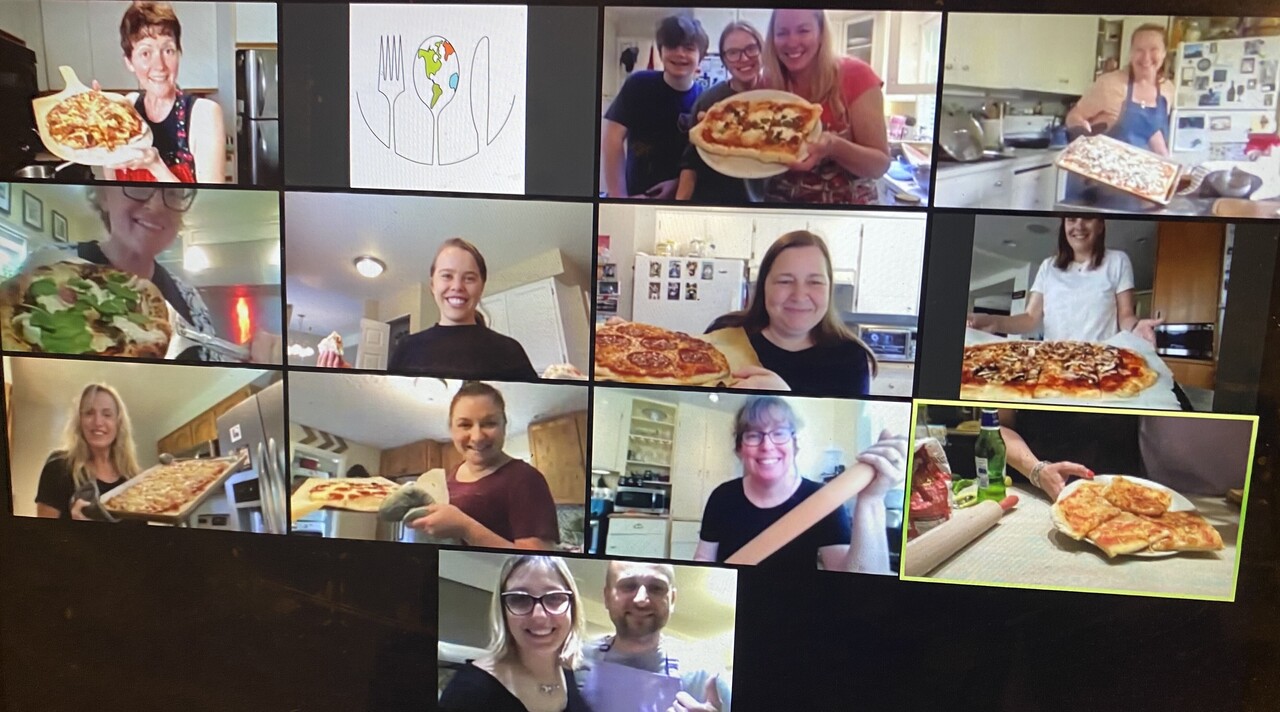
  • Provide a sense of purpose – Give team members projects that will stretch their skills and enable them to contribute in a meaningful way. One of our household managers, for example, is an excellent cook and gave our team a Zoom training on cooking techniques during the shutdown. Everyone loved it and learned from it. This employee gained new skills in planning and presenting a training to the team. She’s also now the “go-to” expert for questions on recipes and meal prep.
  • Hold meetings that aren’t focused on work – We’ve held Zoom meetings focused on self-care, with each employee offering a tip to their colleagues. I call employees regularly without an agenda, just to check in and ask how they’re doing and how I can support them. I want my team to know that I genuinely care and want to help them through this time, even if it’s just to listen or provide some encouragement.

This continues to be a challenging environment, but I’m proud of how our team continues to work through uncertainty and support one another. Communicating frequently, being transparent and treating your employees as people first will help keep your culture strong. Investing in your team will bring huge benefits: Once the pandemic is behind us, you’re likely to have a stronger and more cohesive team than ever before.